“Wait in My Room While I Go Eat” The Peculiar Art of Swedish Hospitality
Footnotes to the Floating World · Curiosities & Oddities
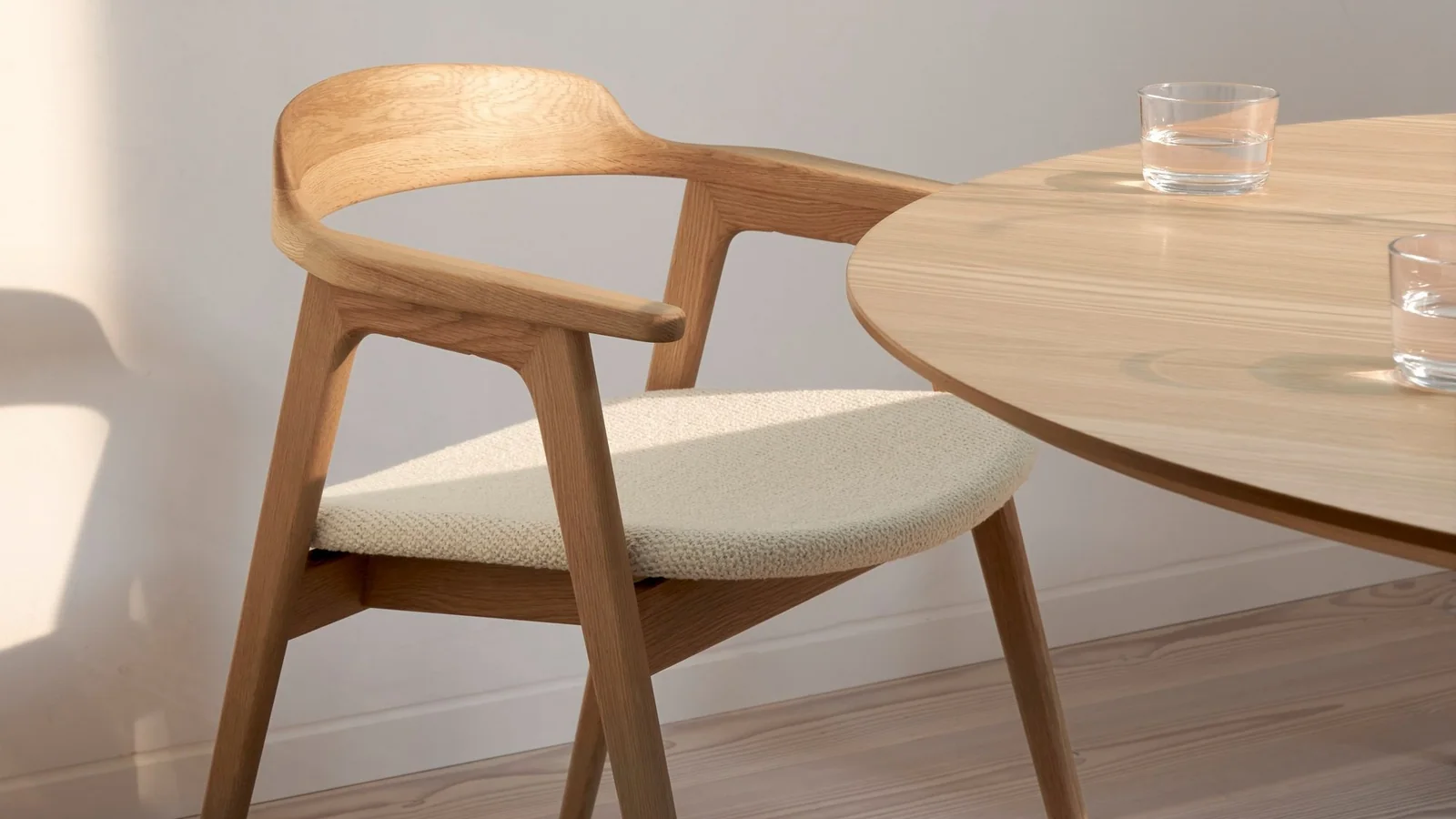
Picture a scene worthy of the annals of human social eccentricity: you are round at a Swedish friend’s house. Early evening rolls in, and an altogether intoxicating aroma of braised meat begins drifting from the dining room. Your friend’s mother calls out that dinner is served. You are already rehearsing the customary polite refusals before graciously accepting a seat at the table, when your friend rises with serene composure and remarks, “Wait in my room for a bit—I’m going to have dinner.”
The door clicks gently shut. For the next fifteen or twenty minutes, your sole occupation is to sit perched on the edge of someone else’s bed, accompanied by the faint clatter of cutlery beyond the wall, left to contemplate the vast mysteries of the cosmos.
In May 2022, a Reddit user casually recounted this minor childhood trauma, unwittingly detonating the global social-media furore known as #Swedengate1,2.
Tellingly, the jaw-dropped onlookers were by no means confined to Chinese households raised on “just fetch another pair of chopsticks,” nor to famously effusive Italians or Indians—virtually the entire rest of the human race stared on in quiet disbelief3,4. Even Sweden’s next-door Nordic relations scrambled to distance themselves from the affair. Several Finnish creators went so far as to film earnest disclaimers, with the solemnity of diplomats disavowing a rogue province: “Kindly refrain from lumping all Nordics together—that is strictly a Swedish habit. In Finland, we actually feed people.”5
A few apologists attempted to smooth things over, insisting this was merely a relic of forty or fifty years ago—positively prehistoric by contemporary standards. Alas, the internet is never short of young people eager to ruin a tidy excuse.
On short-video platforms, several conspicuously young witnesses stepped forward on camera to testify6. Even native Swedes, recalling childhood afternoons spent exiled to a friend’s bedroom while the household dined outside, did not sound quite as breezily “unbothered” as certain academics would have us believe. Rather, they confessed that the sensation of being excluded felt rather wretched—a sentiment echoed bluntly in Lund University’s subsequent anonymous survey, where one respondent wrote: “I felt small, alone and unwelcome.”7
Better—or worse—was yet to come. One young woman recalled visiting a friend at dinnertime and waiting until the family had thoroughly polished off their meal; spotting a stray bit of unwanted salad left over on the table, the hosts magnanimously summoned her out to finish the remnants.
Another memory elevated thrift into something approaching fine art. Having accepted a single drink while visiting a classmate, she returned home only for her classmate’s parents to telephone her own parents and, with complete earnestness, ask them to reimburse the cost of the beverage6. One is left wondering whether the hosts had uncorked a bottle of 1982 Château Lafite, or merely poured a glass of supermarket squash.

Faced with an avalanche of international bewilderment, the Swedes could hardly deny the charge. Swedish pop star Zara Larsson freely acknowledged that the custom had been wholly unremarkable during her upbringing8. Meanwhile, the Folklife Archive at Lund University seized the moment to circulate a public questionnaire. Where such surveys typically attract a polite seventy to a hundred replies, this one pulled in 400 first-hand accounts within a single week, cementing the habit as indisputable national folklore7,9,10.
And it was at this point that the truly fascinating act began.
When all is said and done, how does a remarkably prosperous, generous welfare state—regularly perched near the top of global income charts—harbour a custom of such comical parsimony? Strip away the glossy wrapping paper, and the underlying truth is almost embarrassingly plain: their ancestors were simply terrified of going hungry.
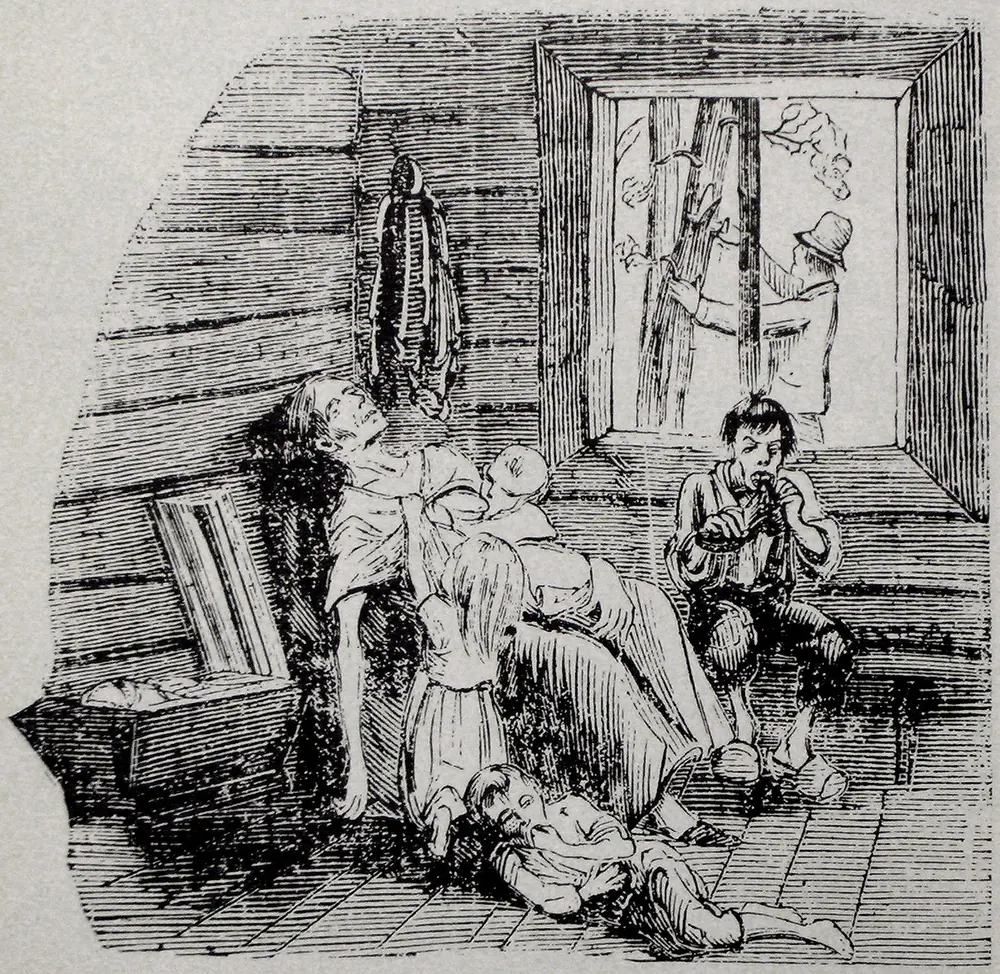
Never mind today’s Sweden of Volvos and minimalist chic; less than two centuries ago, it was among the poorest corners of Europe. At those northern latitudes, winters stretched interminably, the soil was meagre, and farmers had roughly four months of the year to produce twelve months’ worth of food7. During the Great Swedish Famine of 1867–1869, snow still lay stubbornly on the fields at Midsummer, forcing starving villagers to grind tree bark and lichen into their flour just to bake bread11,12. In an era when an extra mouth at the table might mean the entire family tightening its belt come February, every potato, loaf of rye, and pickled herring in the larder was rationed to the gram. Turning away unscheduled guests at suppertime was, quite literally, a matter of survival7,10.
Frugality in lean times is sound common sense. Once the country grew comfortably affluent and supermarket shelves began groaning under mountains of meatballs, however, an inherited reflex that refused to die started looking rather awkward to the outside world.
Fortunately—as a wonderfully tart Chinese internet adage puts it—once one lives in sufficient comfort, even the most ungainly old habit will never lack for eminent scholars queuing up to give it a noble philosophical pedigree.
No sooner had #Swedengate erupted than a phalanx of Swedish food historians, ethnologists, and etiquette commentators marched into the breach, bearing an impressive assortment of lofty explanations.
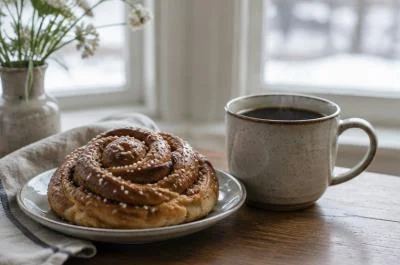
The most frequent defence was: “We aren’t stingy at all—we simply don’t do impromptu dinners.” Scholars solemnly pointed out that Swedes are unfailingly generous with fika—coffee and cinnamon buns—and that failing to offer a visitor coffee would be considered positively scandalous7. It sounds terribly reasonable on paper: caffeine and carbohydrates are plentiful, one gathers, while the meatballs in the pan remain a strictly demarcated red line.
A still more accomplished manoeuvre was to elevate thrift directly into moral philosophy. Food historian Richard Tellström explained to international broadcasters with an entirely straight face: “So I help you by saying that, no, your kid has to go home and eat because then you don’t owe me.”8 He further invoked traditional Lutheran ethics, suggesting that spontaneously feeding a neighbour’s child might wound the other parents’ pride, subtly insinuating that they had fallen on hard times and lost favour with God13. Other commentators wheeled out the celebrated “Swedish Theory of Love,” lauding the practice as a monument to absolute individual autonomy and sacred personal boundaries14,15,16. One respondent to Lund University’s survey even supplied an analogy worthy of framing: “You didn’t want to ‘feed’ someone else’s child without asking their ‘owner’ first—in the same way you don’t give food to someone else’s cat nowadays.”7
One cannot help but admire the sheer Scandinavian restraint and polish of these arguments. The only snag is that the moment one places such gleaming theories back beside actual domestic life, the result turns instantaneously comic. It requires a heroic stretch of the imagination to suppose that a hostess ladling out leftover salad, or a parent picking up the phone to invoice a child’s soft drink, was inwardly meditating upon Martin Luther’s theology and the sanctity of human autonomy at the decisive moment.
To be fair, modern Sweden is slowly thawing. Open-plan kitchens have swept through contemporary flats—making it considerably harder to dine heartily in the living room while pretending a young guest with functioning olfactory nerves does not exist down the hall8. Add to that a few thoroughly sheepish blushes under the global spotlight in recent years, and younger Swedish households are increasingly learning to lay out an extra fork without fuss.
After all, which nation on earth doesn’t keep a few dusty heirlooms from leaner centuries tucked away in its cultural cupboard? Most people, when caught red-handed by outsiders, simply scratch their heads and concede, “Fair enough, it’s a rather tight-fisted habit left over from our grandparents.” Only the Swedes could polish a fossilised relic of rural austerity into a gleaming monument to modern personal boundaries—until the rest of the world politely leaned in and enquired: “We follow the theory entirely, of course, but could you really not spare a single meatball?”
References · 16 entries
- r/SubredditDrama. (2022, May 31). How Reddit accidentally caused a smear campaign against Sweden [Online forum post]. Reddit. https://www.reddit.com/r/SubredditDrama/comments/v1ongx/how_reddit_accidentally_caused_a_smear_campaign/
- r/OutOfTheLoop. (2022, May 31). What is going on with #Swedengate on Twitter? [Online forum post]. Reddit. https://www.reddit.com/r/OutOfTheLoop/comments/v1jp5i/what_is_going_on_with_swedengate_on_twitter/
- NDTV. (2022, June 7). Social media post on Swedes not feeding their guests confuses Asians. https://www.ndtv.com/world-news/social-media-post-on-swedes-not-feeding-their-guests-confuses-asians-3045112
- NPR. (2022, June 7). #SwedenGate sparks food fight: Why some countries share meals more than others [Archived by CapRadio]. https://www.capradio.org/news/npr/story?storyid=1102930419
- Fenlan Kajie [芬兰卡姐🇫🇮 东北话最6的芬兰人]. (n.d.). [Response to the Swedengate controversy: Finns actually feed their guests] [Video]. Douyin. https://www.douyin.com/video/7116353108875283749
- Zhang Bulang & Viking Barbie [章不浪和维京芭比Maple]. (n.d.). [Personal accounts of being left in a bedroom, offered leftover salad, and billed by telephone for a drink in Sweden] [Video]. Douyin. https://www.douyin.com/video/7706832778062515498
- Lund University. (2022, December 15). Swedengate – disrespect or being stingy? https://www.staff.lu.se/article/swedengate-disrespect-or-being-stingy
- Simon, S. (Host). (2022, June 4). #SwedenGate alleges the Swedes don't feed other people's children on playdates [Radio broadcast transcript]. NPR Weekend Edition / WPSU. https://radio.wpsu.org/2022-06-04/swedengate-alleges-the-swedes-dont-feed-other-peoples-children-on-playdates
- Lunds universitet. (2022, December 15). Swedengate – snålt eller respektfullt att inte utfodra andras barn? https://www.lu.se/artikel/swedengate-snalt-eller-respektfullt-att-inte-utfodra-andras-barn
- Jönsson, H. (2023). Swedengate: When commensality norms collide. Lund University Research Portal. https://portal.research.lu.se/en/publications/swedengate-when-commensality-norms-collide/
- Wikipedia. (n.d.). Swedish famine of 1867–1869. In Wikipedia. https://en.wikipedia.org/wiki/Swedish_famine_of_1867%E2%80%931869
- Environment & Society Portal. (n.d.). Last great famine in Northern Europe. Rachel Carson Center for Environment and Society. https://www.environmentandsociety.org/tools/keywords/last-great-famine-northern-europe
- Ledel, J. (2022, June). Stingy Swedes? Viral tale spotlights Swedish cultural quirk [Agence France-Presse]. Inquirer Lifestyle. https://lifestyle.inquirer.net/405077/stingy-swedes-viral-tale-spotlights-swedish-cultural-quirk/
- Berggren, H., & Trägårdh, L. (2022). The Swedish theory of love: Individualism and social trust in modern Sweden. Open Library. https://openlibrary.org/books/OL36767744M/Swedish_Theory_of_Love
- University of Washington Department of Scandinavian Studies. (2022, December). Crossing North 21: The Swedish theory of love. https://scandinavian.washington.edu/crossing-north-21-swedish-theory-love
- The Swedish Theory of Love review – a nation's obsession with self-sufficiency. (2016, June 23). The Guardian. https://www.theguardian.com/film/2016/jun/23/swedish-theory-love-documentary-film-review-independence-self-sufficiency
Say Something
Where have you been a guest, and what hospitality spectacle left you speechless?